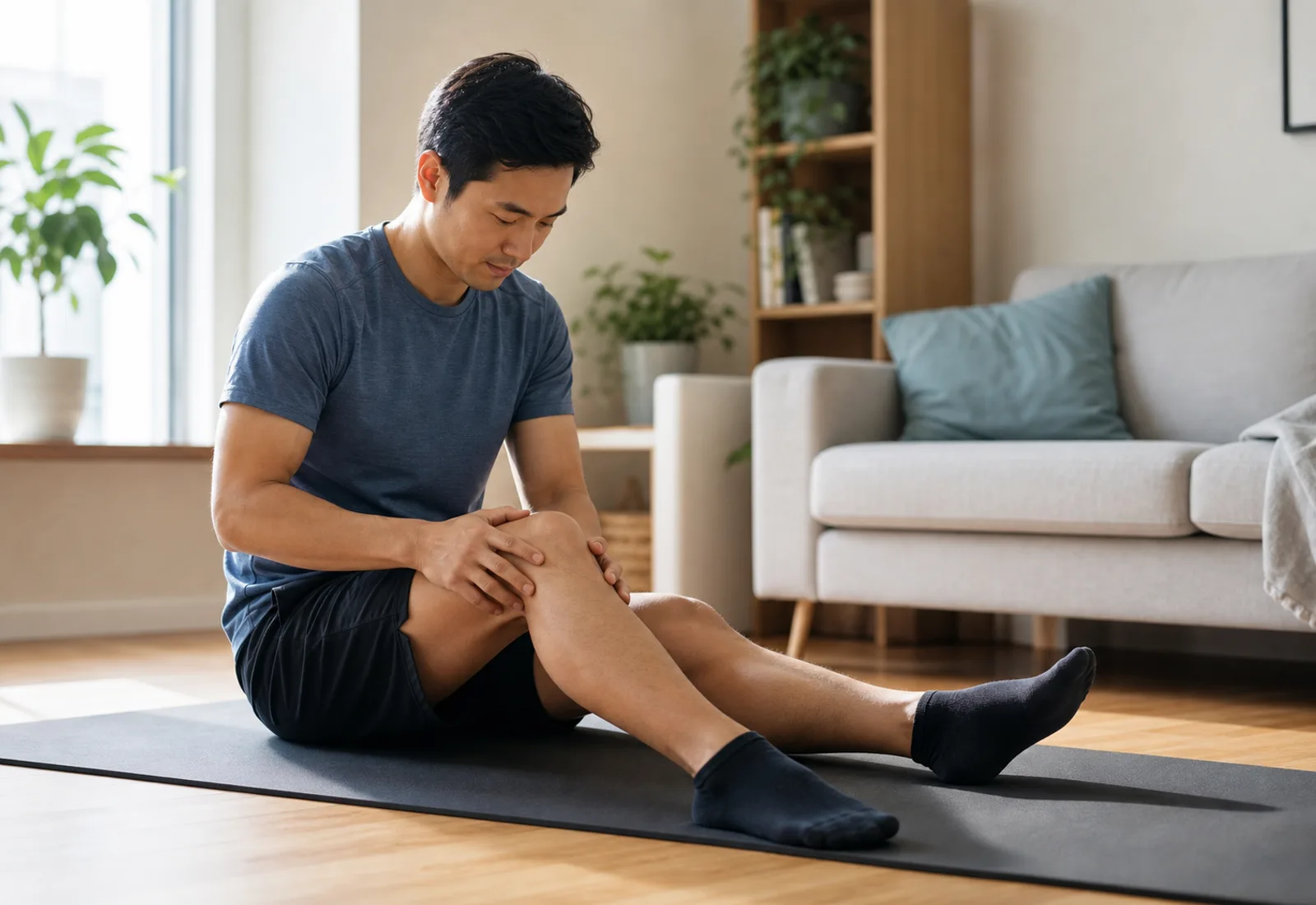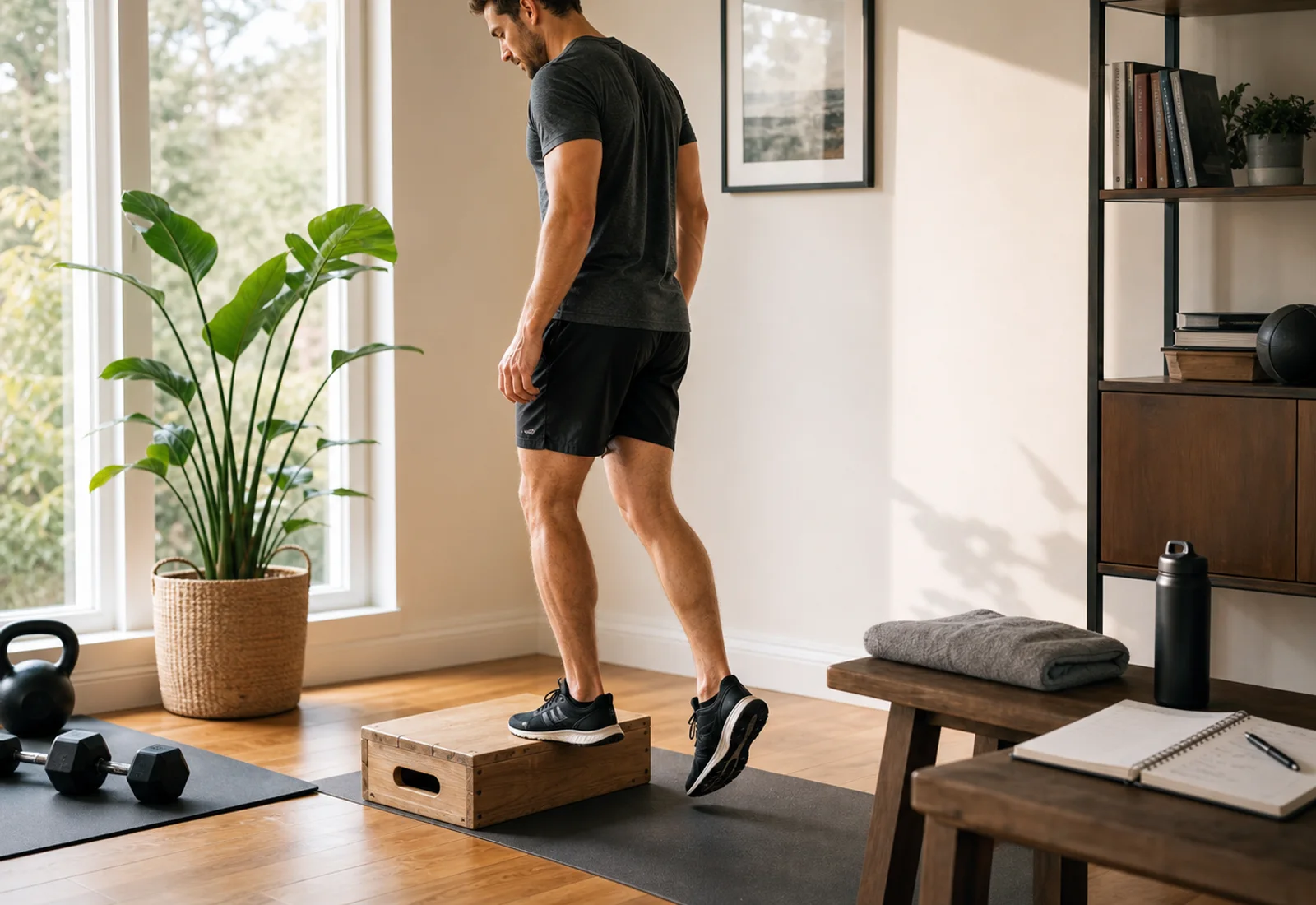
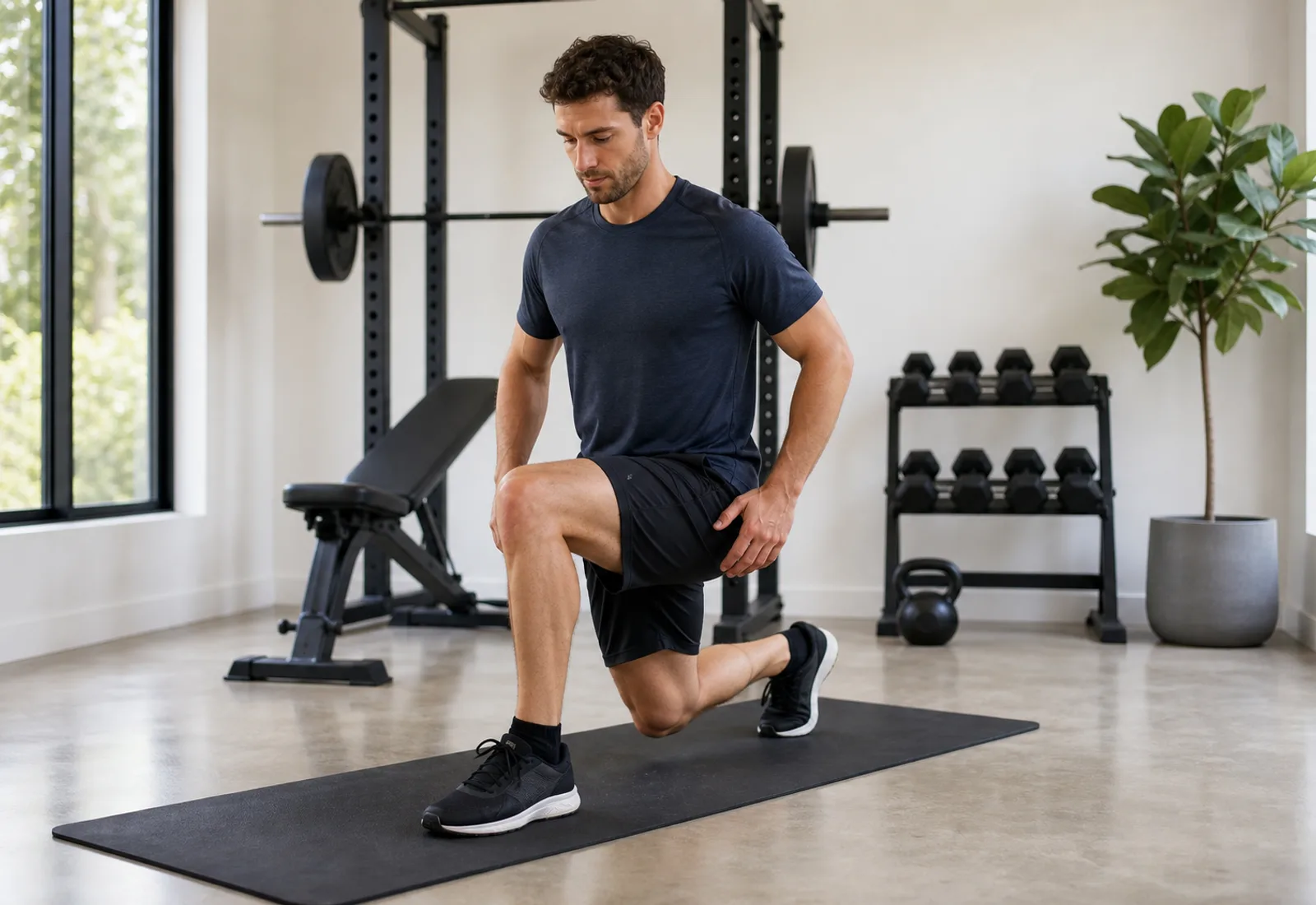
Knee pain when lunging can feel more specific than general knee pain. Squats may be manageable, walking may be fine, but the moment one leg steps forward or back into a lunge, the knee becomes sharper or less trustworthy.
People describe the search in several ways: knee pain during lunges, pain in the knee during a lunge, front knee pain lunges, or knee pain with split squats. Those phrases point to a movement pattern, not a diagnosis.
Who this page is for
This page is for people whose knee reacts during lunges, split squats, step-downs, reverse lunges, walking lunges, or similar single-leg lower-body work. It is especially relevant if the same knee also responds during squats, stairs, or front-knee bending.
Common scenarios
Common versions include:
- bodyweight lunges feel fine until volume rises
- deep lunges hurt but shallow split squats are manageable
- the front knee feels sharp when lowering or pushing back up
- lunges flare the knee after a week that already included hills, stairs, or running
- pain appears after restarting lower-body training too quickly
Quick answer for knee pain during lunges
Knee pain during lunges often means the current lunge variation is ahead of what the knee can tolerate right now. The issue may be depth, stride length, speed, load, volume, fatigue, or how the hip and ankle are contributing.
It is not always a simple form problem. A technically reasonable lunge can still be too much if the dose is wrong for the current state of the knee.
Why lunges can expose the pattern
Lunges are not just squats with one foot forward. They require single-leg control, balance, hip contribution, knee bend, ankle motion, and confidence. The front leg often has to control the descent and produce force again from a more demanding position.
That is why lunges can be the first movement to reveal a problem even when everyday walking feels fine.
What to test before adding more exercises
Before adding a long list of corrective exercises, test the lunge itself more carefully.
Useful variables include:
- range of motion
- stride length
- tempo
- external load
- support from a wall, rail, or stick
- total sets and reps
- how the knee feels later that day and the next morning
If one version is clearly better, that version may be the starting baseline.
How lunges connect to other knee patterns
If lunges and squats both hurt, read knee pain when squatting. If the problem is most obvious on stair descent, compare it with knee pain going down stairs. If the area is directly below the kneecap and tied to jumping or sprinting, patellar tendon pain may be more relevant.
The same knee can also react to running, especially when lower-body training and mileage increase together.
A calmer progression
A useful progression is usually smaller and clearer than "push through" or "remove lunges forever."
For some people, the first step is:
- a supported split squat
- a shallower range
- slower tempo
- fewer reps
- less external load
- more space between lower-body sessions
Then one variable changes at a time. That makes the knee response easier to interpret.
When to stop self-testing
Do not use lunge experiments to reassure yourself if the knee is unstable, rapidly swelling, locking, unable to bear weight, or painful after trauma. Those patterns need professional evaluation first.
If the symptoms are familiar, mild, and clearly load-related, the goal is to find a repeatable starting point before rebuilding depth, load, and confidence.