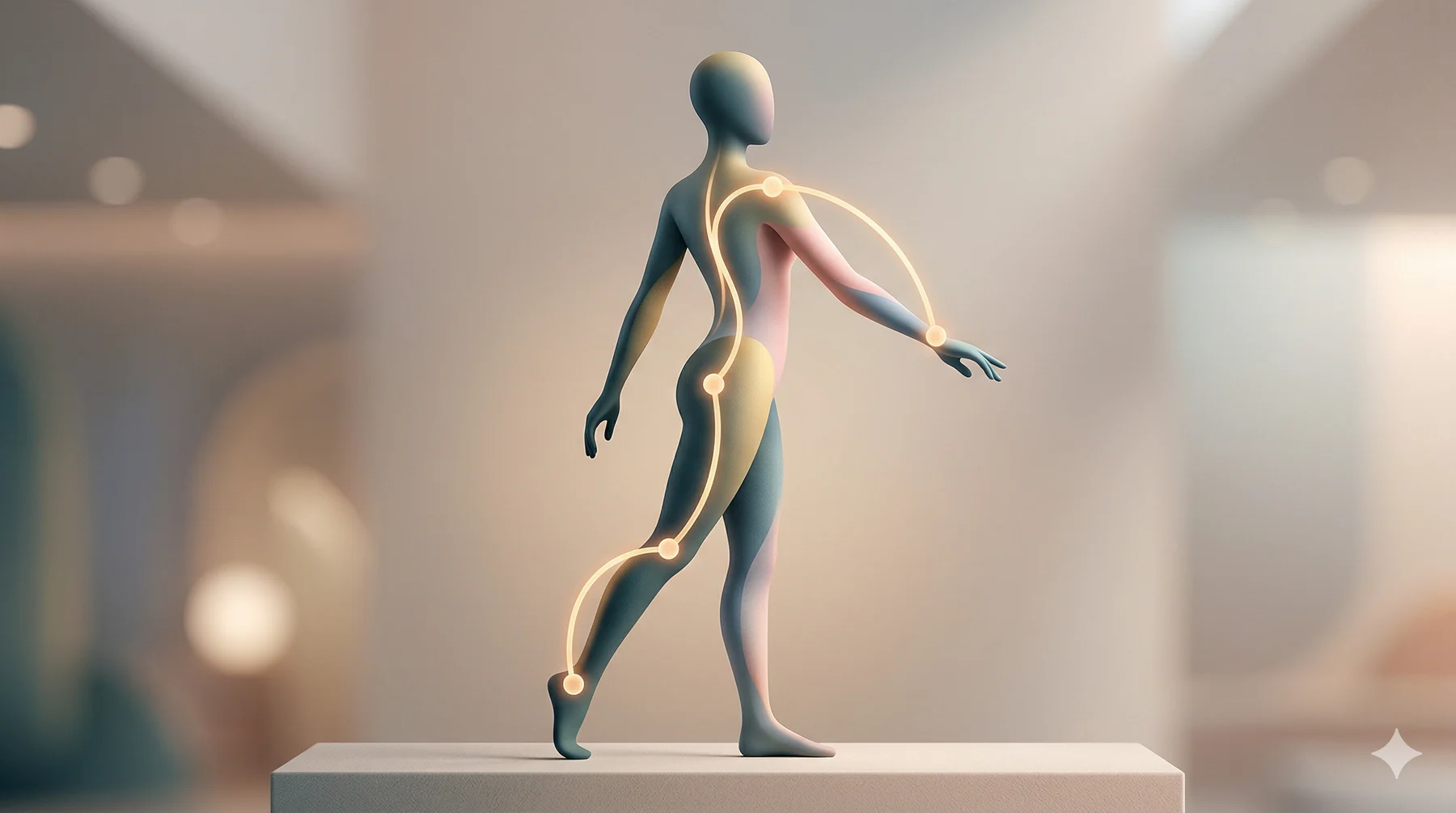

Tendon pain often feels confusing because it rarely behaves in a straight line. It can ease for a while, flare after a busy week, settle again, then come back after a return to normal activity. That up-and-down pattern is one reason people end up feeling stuck.
If your tendon pain keeps coming back after rest, the missing piece is often not effort. It is the lack of a clear bridge between feeling calmer and tolerating the activity you actually want back.
Who this page is for
This page is for people whose pain pattern sounds less like one dramatic injury and more like a repeat loop. You may be training again, building back from a break, or simply trying to understand why a familiar area keeps becoming sensitive during normal life.
It is especially relevant if your pattern overlaps with knee pain when squatting, patellar tendon pain, or Achilles pain after running.
Common scenarios behind the search
Some of the most common versions of this story look like:
- a busy training week followed by a flare that feels bigger than expected
- a few calmer days followed by pain as soon as normal activity resumes
- a tendon that feels acceptable during the session but worse later that day or the next morning
- a return to sport or gym work that was based on hope rather than a clear progression
Recurrence is often a pattern problem, not a motivation problem
When pain keeps returning, many people assume they must be doing the wrong exercise or not doing enough. Sometimes that is partly true. But just as often the real issue is that the broader pattern never got clarified in the first place.
That broader pattern can include:
- how quickly training or daily load increased
- whether the painful area was already irritable before the increase
- whether sleep, stress, desk time, or routine changes reduced recovery capacity
- whether another area in the chain is shaping how the tendon is being loaded
If those parts stay invisible, recovery can become a cycle of short-lived relief followed by another setback.
What changed recently matters more than people think
One of the highest-value questions in recurring pain is simply: what changed recently? That can mean a training jump, more desk time, travel, worse sleep, a more stressful week, or a quiet reduction in recovery habits that normally help the system keep up.
If that recent-change story is still fuzzy, it is usually worth slowing down and using the assessment or method page to map the bigger picture before you add more exercises.
A flare does not automatically mean you are back at zero
This is where a calmer model helps. Tendons respond to load over time. Pain can rise faster than tissue capacity changes, which is why a flare can feel dramatic even when the bigger long-term picture is more mixed.
That does not mean pain should be ignored. It means a flare is usually more useful as feedback than as proof that everything is failing. A good next step is to ask:
- what changed in load, routine, or movement confidence?
- what part of the plan became too much, too soon, or too vague?
- what can be adjusted without stopping everything?
Why tendon pain can come back after rest
Rest can calm symptoms because it removes the immediate demand. That can be useful, especially when the tendon is highly irritable. But rest does not automatically rebuild tolerance for running, squatting, gripping, jumping, or sport.
That is why the same pattern can return:
- symptoms settle while the task is removed
- confidence rises because the area feels quieter
- the original activity returns at almost the same dose
- the tendon response shows up again later that day, the next morning, or later in the week
The gap is usually the progression between rest and the real goal. A better plan makes that bridge more visible.
Why generic routines often stop helping
Generic sheets can be useful as a first nudge, but recurring pain usually needs more context than a long list of drills. If the routine does not match the real aggravators, it becomes hard to learn from the response.
That is one reason people end up oscillating between extremes:
- doing too much because the plan feels vague
- doing too little because any pain feels like a sign to stop completely
Neither extreme explains the pattern very well.
What to modify first
The first adjustment usually works best when it is narrow and testable:
- reduce one major aggravator instead of removing every activity
- match the loading style to the return goal you actually care about
- make the next 24 hours part of the decision, not just the workout itself
- choose a plan you can repeat for a full week without guessing each session
What to assess before adding more exercises
A more useful starting point is to assess:
- the main trigger pattern
- how long the pain has behaved this way
- whether the issue is local only or connected to workload elsewhere
- what the person actually needs to return to
- which warning signs would make professional evaluation the right first move
That assessment-first approach does not promise certainty. It simply gives the next decision a better foundation.
What not to do this week
Avoid turning the week into a random experiment. That usually means not stacking multiple big changes at once, not chasing a pain-free miracle session, and not interpreting one okay day as proof you are ready for a full jump back to normal. Structure first, intensity second.
Practical takeaway
If tendon pain keeps coming back, try not to treat every setback as a total reset. First map the pattern. Look for load changes, routine changes, movement changes, and the wider chain around the painful area. The goal is not to guess harder. It is to make the next step more specific.