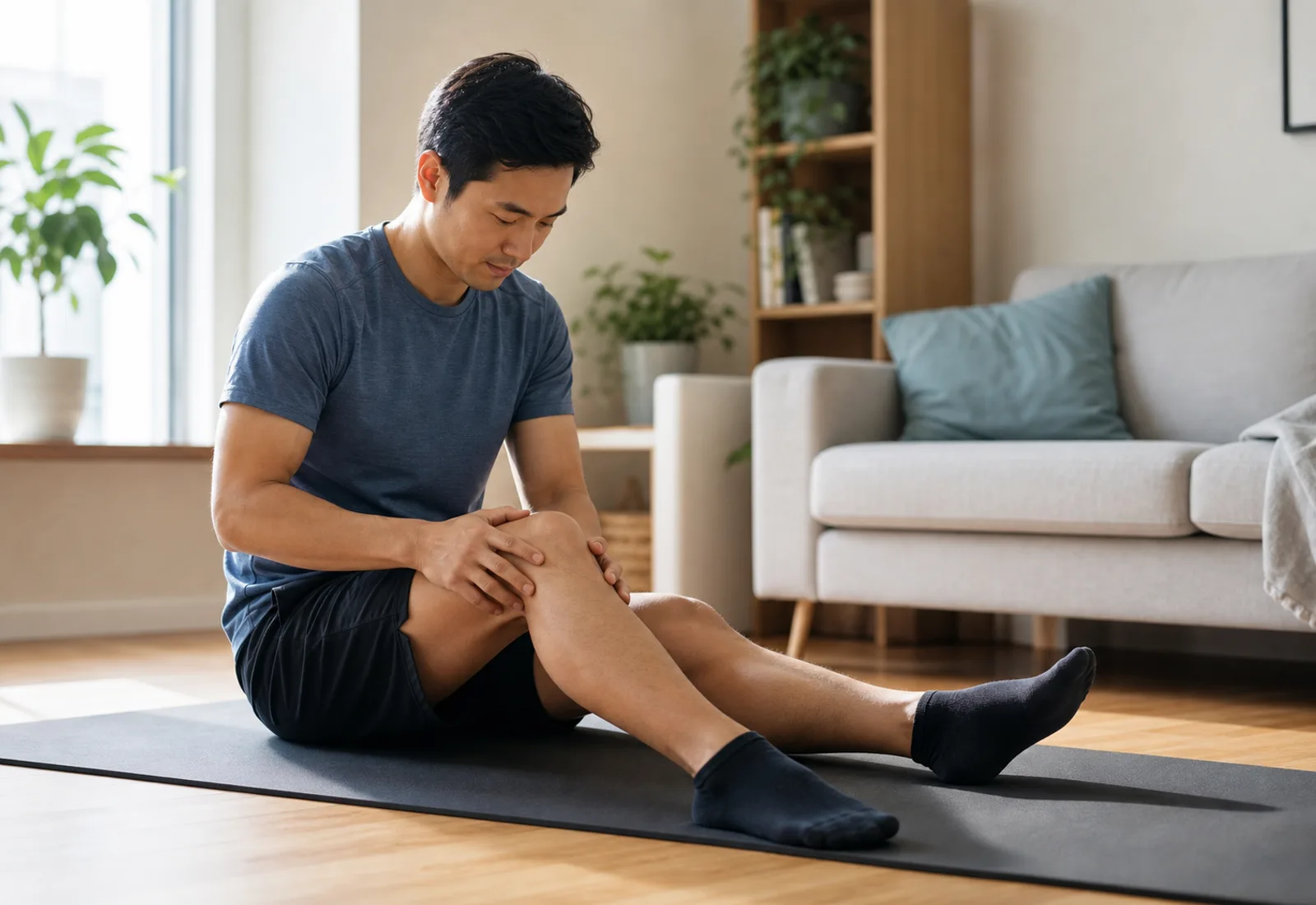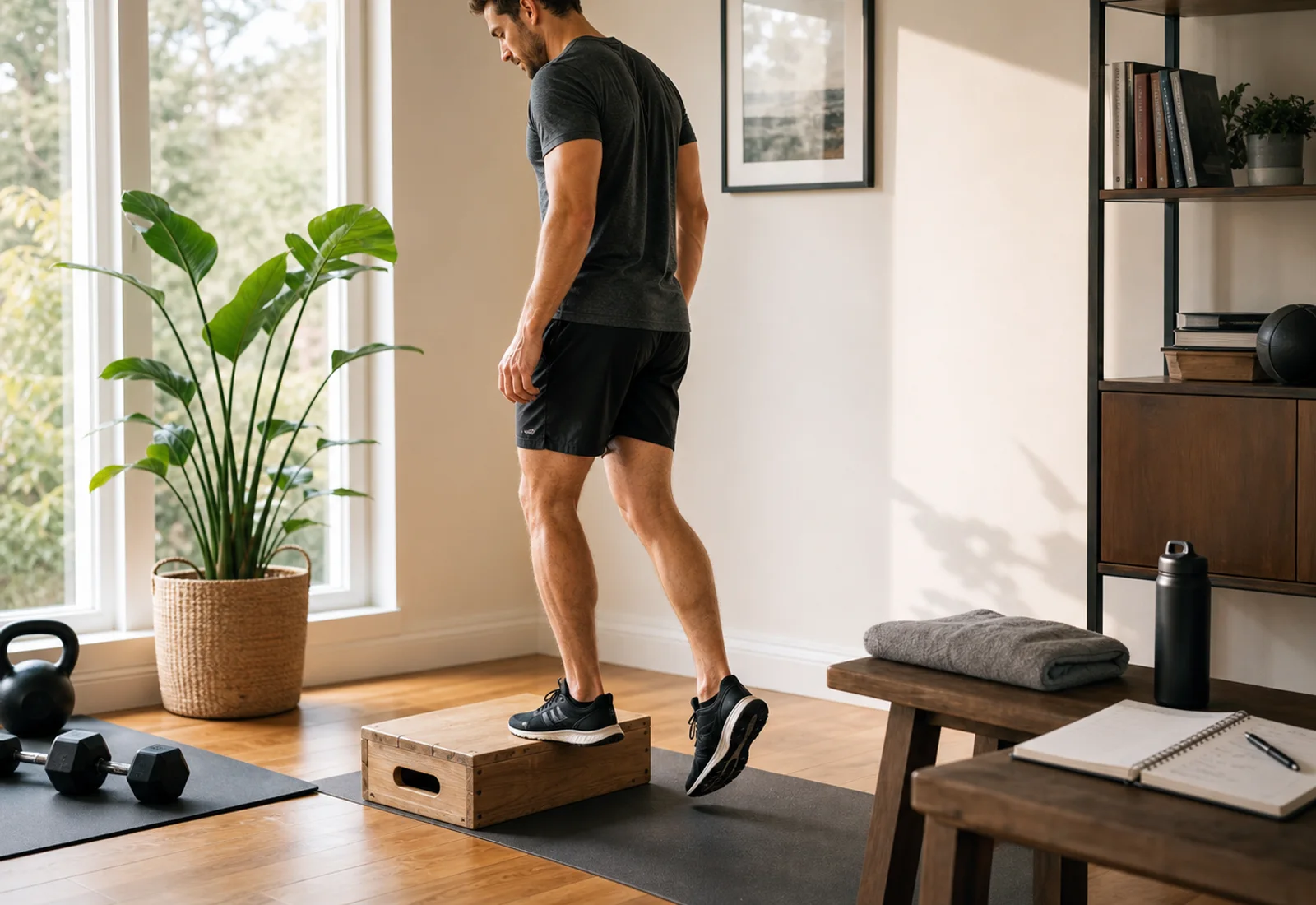

Knee pain when squatting is a common search because the pattern feels specific. The moment you lower into the movement, the knee starts talking back. People describe it as knee pain during squats, pain in the knee during a squat, or a knee that hurts when squatting but feels mostly fine in normal walking. Those phrases are useful starting points, but they do not automatically identify one simple explanation under the painful spot.
Who this page is for
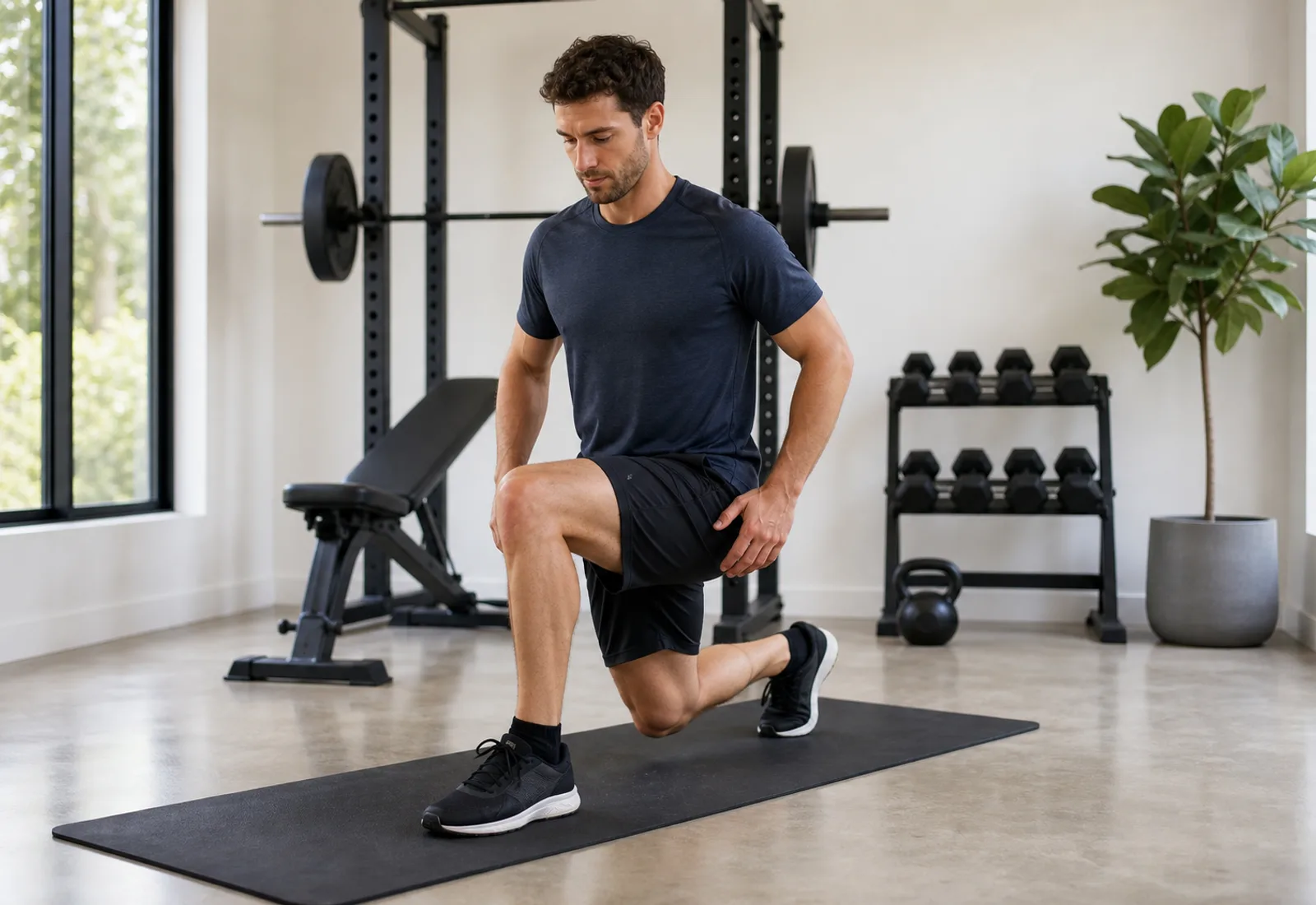
This page is for people who feel knee pain during squats, split squats, sit-to-stands, gym sessions, or similar bent-knee lower-body work. It is especially useful if you are trying to sort out whether the pattern behaves more like patellar tendon pain, a broader lower-body loading issue, or a “why does this keep coming back?” problem linked to whole-body movement patterns.
Common scenarios
People usually land here when:
- the knee is sore only at deeper squat angles
- bodyweight squats feel fine until volume rises
- gym training restarted after a break and the knee reacts faster than expected
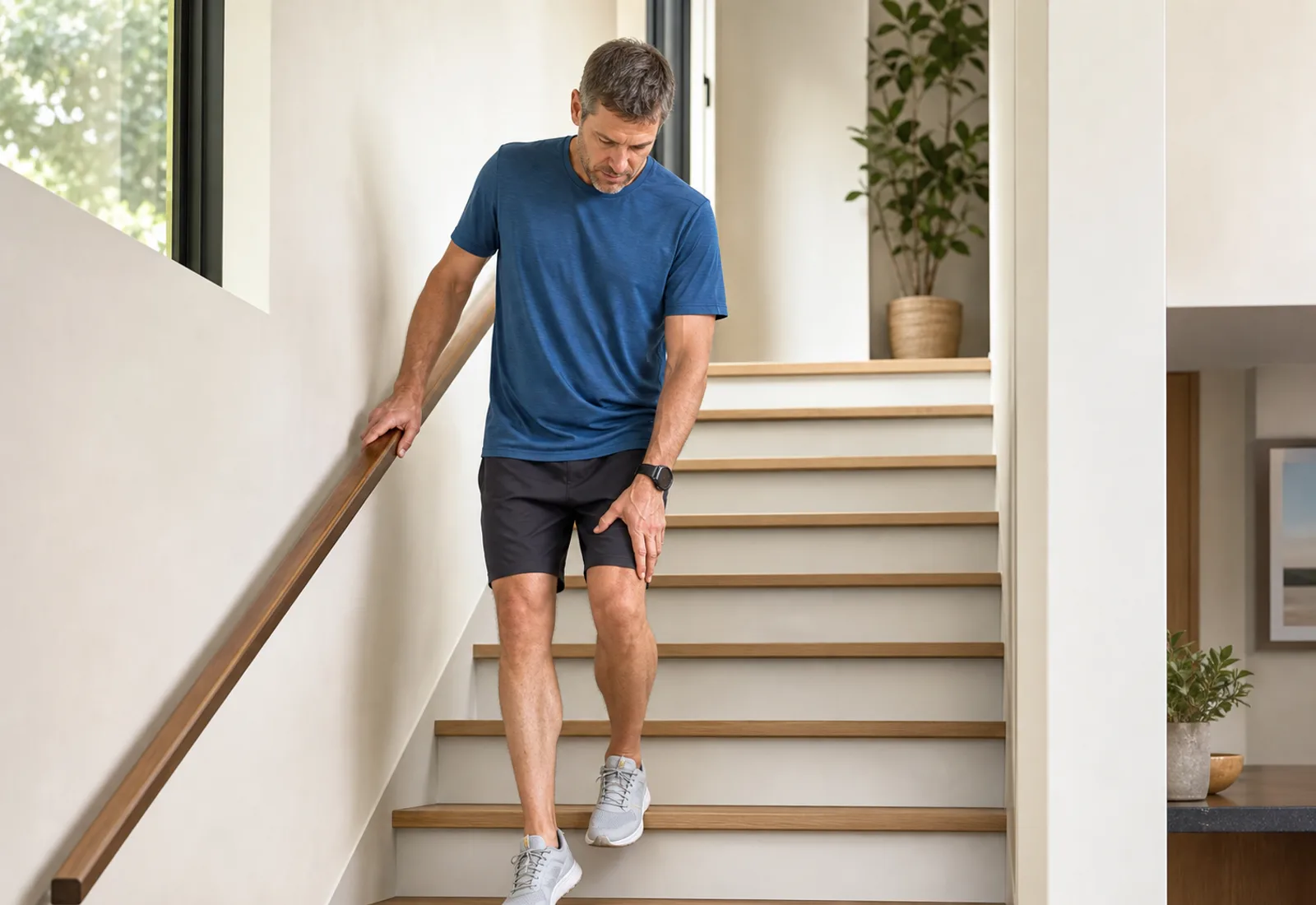
- stair work, downhill walking, running, and squatting are all stacking in the same week
Quick answer for knee pain during squats
Knee pain during squats often reflects a mismatch between the squat demand and what the knee and lower body are tolerating right now. The important variables are not only "good form" or "bad form." The pattern can change when any of these shift:
- squat depth
- tempo and control
- total sets and weekly volume
- external load
- ankle mobility and foot position
- hip and trunk contribution
- running, jumping, stairs, or sport load in the same week
If the pain is mild and predictable, the next step is often to modify one squat variable and watch the response over the next day. If the knee swells quickly, gives way, locks, follows trauma, or becomes rapidly worse, self-guided training is no longer the right first step.
What this pattern can sometimes involve
This pattern can sometimes involve local sensitivity around the front of the knee, the patellar tendon, or the way the joint is currently tolerating compression and load. In other cases, the knee is reacting to a broader lower-body problem:
- the ankle is not contributing enough
- the hips are not sharing the task well
- squat volume increased faster than tolerance
- confidence dropped after a previous flare
That is why two people can both say "my knee hurts when I squat" while needing very different starting points.
If the pattern keeps settling and returning, why tendon pain keeps coming back is often the best companion read.
Common aggravating situations
Several factors can contribute to the pattern getting louder:
- returning to leg training after time off and resuming old loads immediately
- pairing heavy squats with extra jumps, runs, or sport sessions in the same week
- chasing depth or speed before the area is ready for it
- ignoring how the knee responds later that day or the next morning
Sometimes the knee is calm during daily life but reacts as soon as squat depth increases. Sometimes the area is already mildly irritable and squatting is simply where it becomes obvious.
Why it can hurt in a squat but not while walking
Walking and squatting are not the same test. A squat usually asks for more knee bend, more compression tolerance, more control, and often more load. That is why a person can walk around comfortably but feel pain at a specific squat depth or after several sets.
This does not make the squat bad. It means the squat is exposing the current limit more clearly than daily movement does. A useful plan finds the version of the movement that is tolerable enough to repeat, then rebuilds from there.
What changed recently
The recent-change story often matters more than the label. Did squat depth increase? Did leg day return after time off? Did running or jumping ramp up at the same time? Did your week get more stressful or less recoverable? Those changes often explain why the knee suddenly starts objecting to a movement that used to feel normal.
Why it may keep coming back
Recurring squat pain often survives when the plan is too local or too generic. If the only advice is to "strengthen the knees" or "stretch more," it is easy to miss the actual pattern behind the flare.
A good starting point is to assess:
- whether training load changed recently
- whether the painful response is mostly at depth, under speed, or after volume
- whether the ankle, hip, or trunk are changing how the load is shared
- whether another activity outside the gym is quietly adding demand
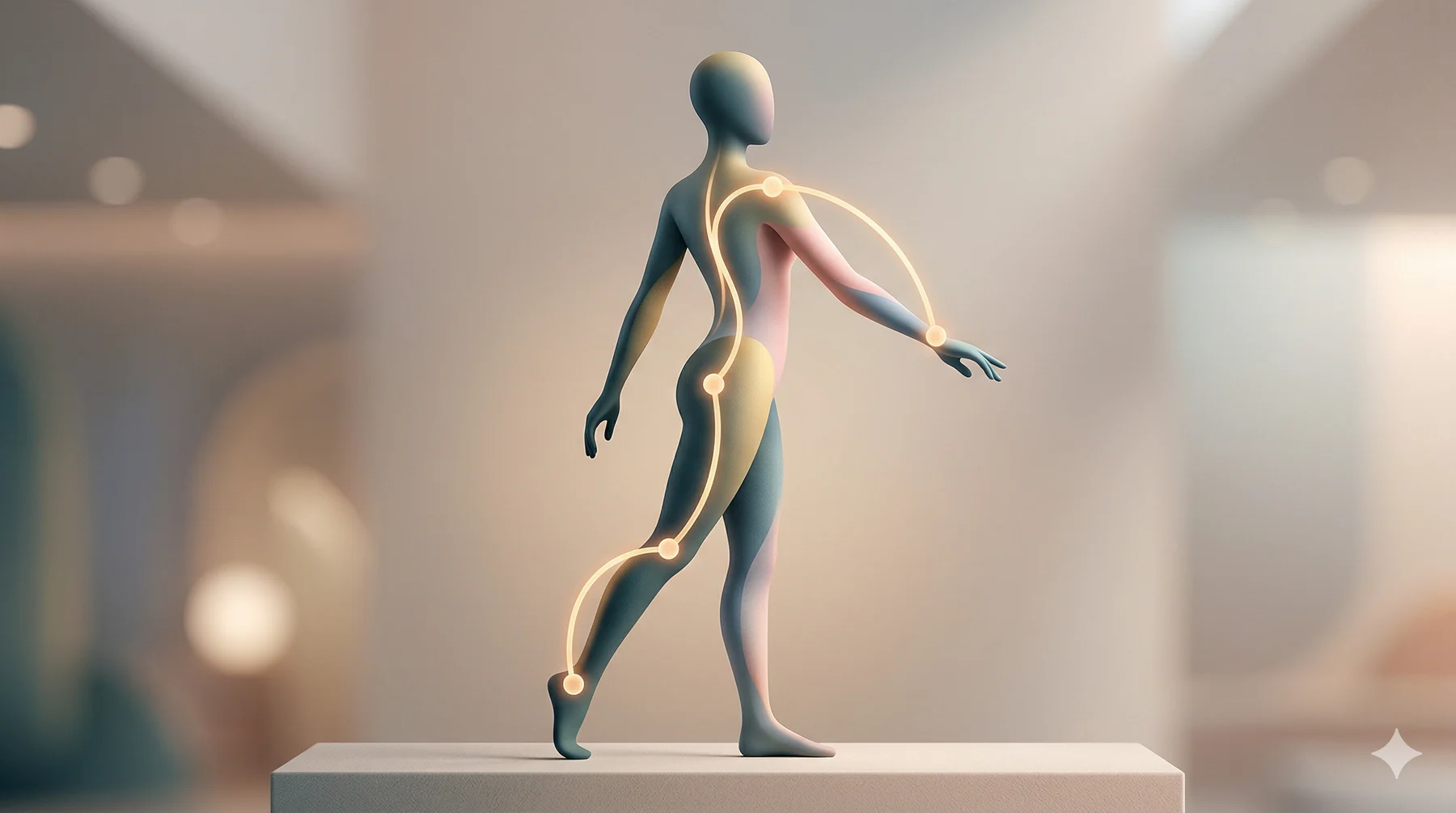
This is where whole-body thinking becomes practical. It is not about making things abstract. It is about explaining why the same movement keeps becoming the breaking point.
That is also why the JointReset assessment and method page start with the task, the week, and the wider chain instead of jumping straight to a long exercise list.
What JointReset looks at
JointReset is designed to look beyond the symptom while still staying focused. For this pattern, that can include:
- where in the squat the pain shows up
- whether the trigger is load, depth, tempo, or frequency
- what your week already contains outside squats
- whether ankle mobility or hip contribution looks limited
- how confident you feel loading into the movement again
That kind of assessment can help shrink the plan rather than expand it. The goal is not a huge list of drills. It is a better first guess about what matters most.
What a starting plan might focus on
A starting plan often works best when it is specific and repeatable. That might mean:
- choosing a squat variation or range that feels more tolerable
- adjusting volume or depth before changing everything at once
- adding focused lower-body loading that fits current irritability
- rebuilding tolerance over the week instead of testing it randomly
The next 24 hours matter here. A movement that feels acceptable during the session but produces a much sharper flare later may still need adjustment.
What to modify first
Start with the piece of the squat pattern that is easiest to repeat and easiest to test:
- depth
- tempo
- total sets or weekly volume
- one linked lower-body factor such as ankle contribution or stacked running load
What not to do this week
Do not chase full-depth, pre-flare training numbers right away. And do not change depth, volume, exercise selection, and every other lower-body activity all at once. The more random the week becomes, the harder it is to learn what the knee is actually responding to.
When to stop and seek professional evaluation
Knee pain during squatting is not automatically a crisis, but some versions of this pattern do need professional care first. Stop the self-guided experiment and seek evaluation if the knee pain follows recent trauma, you cannot bear weight properly, swelling rises quickly, the knee gives way, or the symptoms are severe, unusual, or rapidly worsening.
Practical takeaway
If your knee hurts when you squat, resist the urge to guess from the search term alone. This pattern can sometimes involve the knee locally, but it can also reflect how the lower body is sharing load, how training changed, and how confidently you are returning to the movement. A better starting point is to assess the whole picture, then rebuild from a variation you can actually repeat.