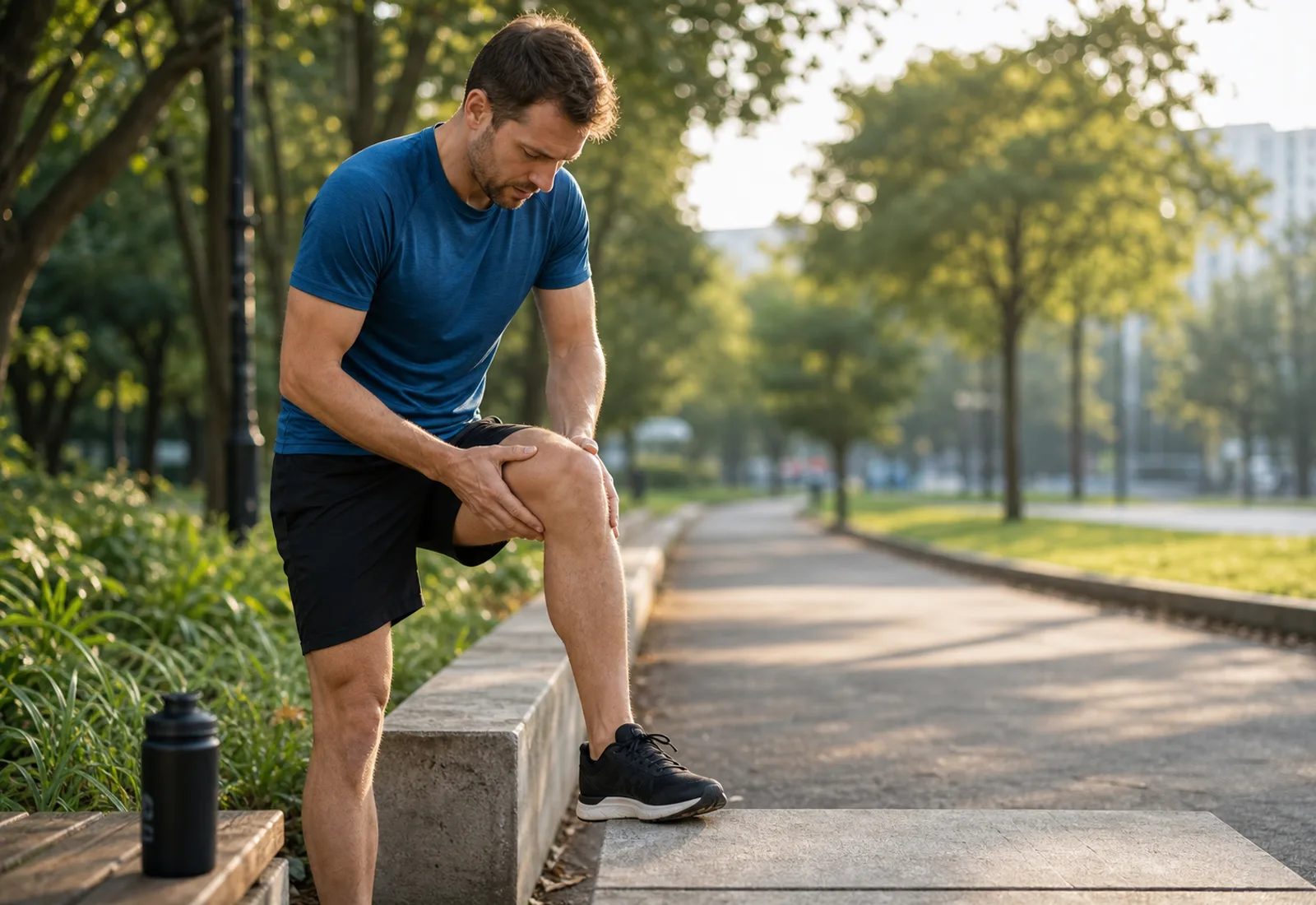
Knee pain after running is often frustrating because the run itself may not explain the whole story. Sometimes the knee hurts during the session. Other times it feels acceptable while you run, then becomes sore later that day or the next morning.
People search this as knee pain after running, knee hurts after running, front of knee pain after running, or runner's knee after running. Those phrases are useful starting points, but they do not identify one exact cause by themselves.
Who this page is for
This page is for runners, return-to-running athletes, and active people whose knee becomes sore after runs, jogs, intervals, hills, or long walks. It is especially relevant if the same knee also reacts during front-of-knee bending, going down stairs, or squatting.
Common scenarios
Common versions include:
- the knee feels fine for the first part of the run, then gets sore later
- pain appears the next morning after a route with hills or faster pace
- running restarted after a break and the first few sessions felt deceptively easy
- strength training, stairs, and running all increased in the same week
- the knee settles with rest, then returns as soon as normal mileage resumes
Quick answer for knee pain after running
Knee pain after running often means the current running load is ahead of what the knee and lower body can tolerate consistently right now. The issue may be distance, pace, hills, downhill exposure, running frequency, recovery, or the total load from other activities in the same week.
That does not mean every runner needs to stop completely. It does mean the pattern needs clearer feedback than "try another normal run and hope."
Look at the last one to two weeks
Running pain often makes more sense when you zoom out. The painful session may not be the only relevant session.
Check whether any of these changed:
- weekly mileage
- long-run distance
- pace or interval work
- hills or downhill exposure
- shoes, terrain, or route camber
- squat, lunge, jump, or sport volume
- sleep, travel, desk time, or recovery window
If more than one variable changed, the signal gets noisy. A more useful plan usually changes one major lever at a time.
Why the next day matters
The knee can give feedback after the run, not only during it. A session that feels tolerable while you are warm may still be too much if the response later is stronger, lasts longer, or changes how you walk, use stairs, or train the next day.
That delayed response is one reason rest-only cycles are misleading. Rest may quiet symptoms, but it does not automatically rebuild the tolerance needed for the next running block.
How this connects to other knee guides
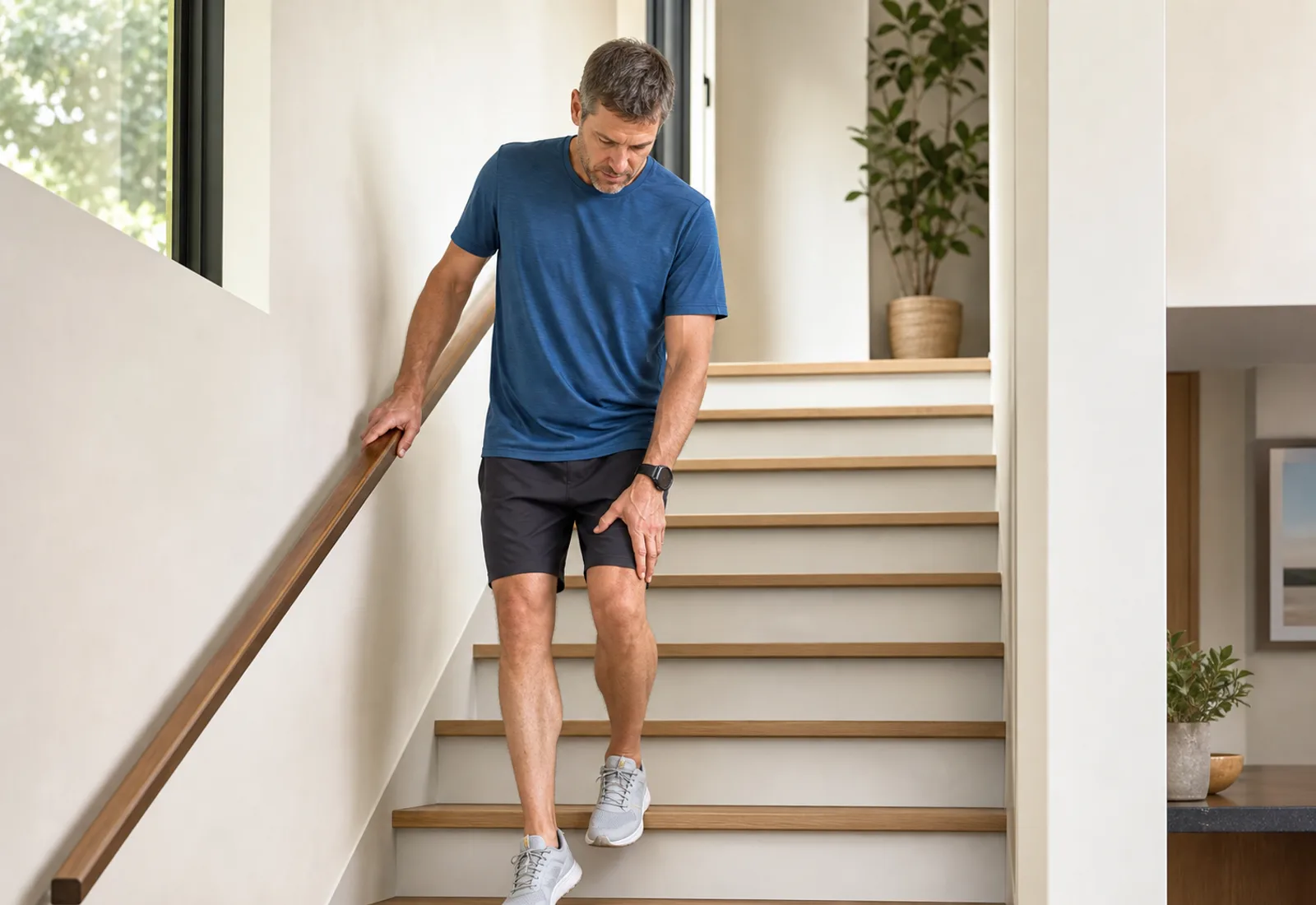
If the pain sits mostly around the front of the knee and bending is the common trigger, start with front of knee pain when bending. If stair descent is the clearest daily problem, read knee pain going down stairs. If the pain is tied to lower-body training, compare it with knee pain when squatting and knee pain when lunging.
If the tendon below the kneecap is the most specific area, and jumping, sprinting, or heavy squatting are major triggers, the patellar tendon pain guide may fit better.
A more useful starting plan
The starting point is not the hardest run you can complete. It is the run the knee can repeat and recover from.
For some people, that means temporarily adjusting:
- distance before pace
- hills before flat routes
- frequency before long-run distance
- lower-body gym volume before adding more running
- the gap between hard sessions
The goal is to create a baseline you can learn from. Once the response is predictable, progression becomes easier to judge.
When to stop self-testing
Self-guided running adjustment is not the right first step if the knee is rapidly swelling, unstable, locking, unable to bear weight, or painful after trauma. The same applies when symptoms include fever, numbness, severe night pain, unexplained weight loss, or rapid worsening.
If those are absent and the pattern is familiar, mild, and load-related, a structured assessment can help you connect running symptoms with the rest of the lower-body pattern before adding more miles.