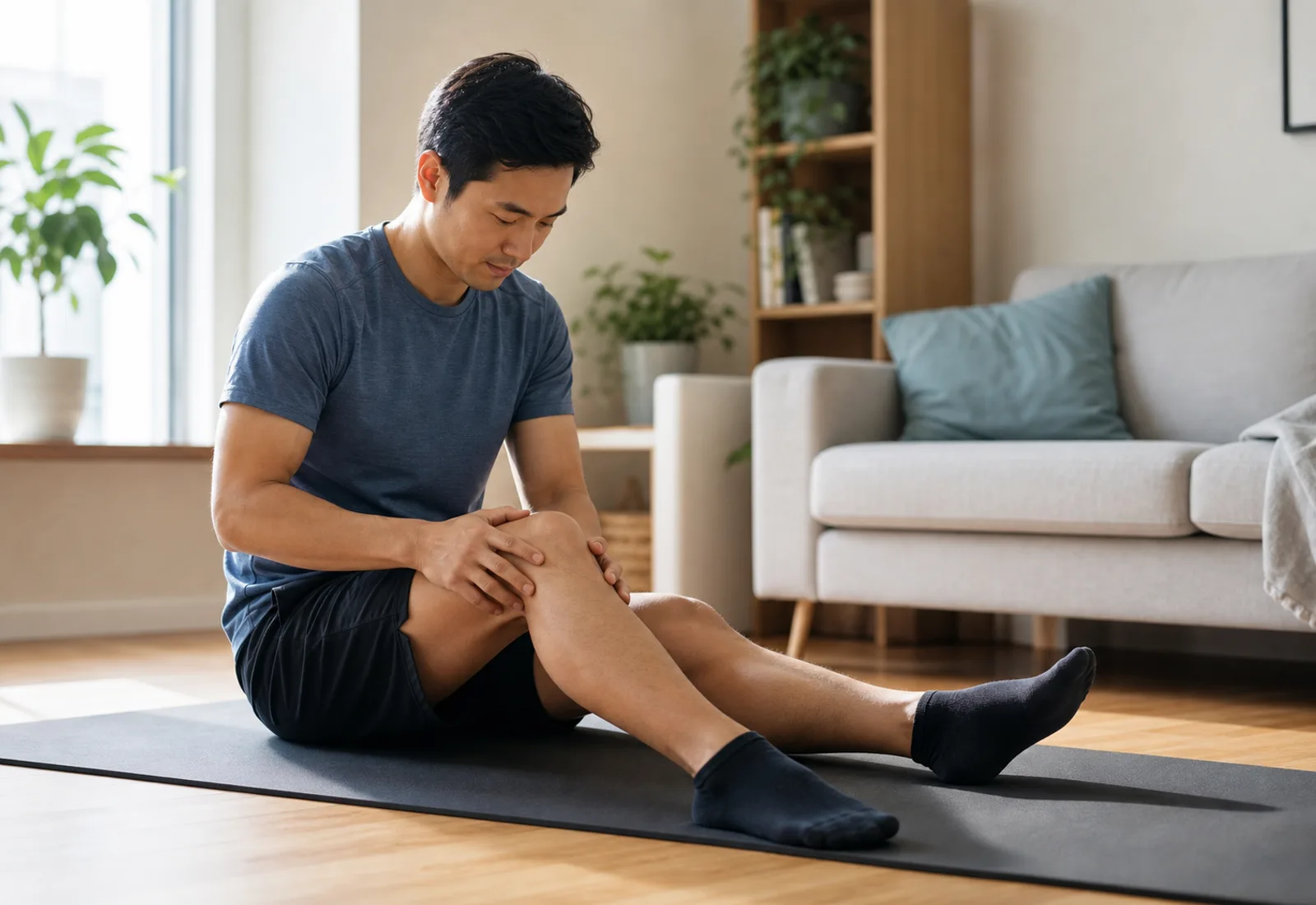
Front-of-knee pain when bending is a common search because the location feels obvious but the explanation often does not. The pain may appear during squats, stairs, lunges, sitting-to-standing, kneeling, or running. It may sit around the kneecap, below it, or across the front of the knee.
Searchers often describe it as front knee pain bending, pain in front of knee when bending, kneecap pain when bending the knee, or anterior knee pain. Those labels are useful, but they still need context.
Who this page is for
This page is for people whose pain is most obvious when the knee bends under load. It is especially relevant if the pattern overlaps with knee pain when squatting, knee pain going down stairs, knee pain when lunging, or knee pain after running.
Common scenarios
Common versions include:
- the front of the knee hurts during deeper knee bend
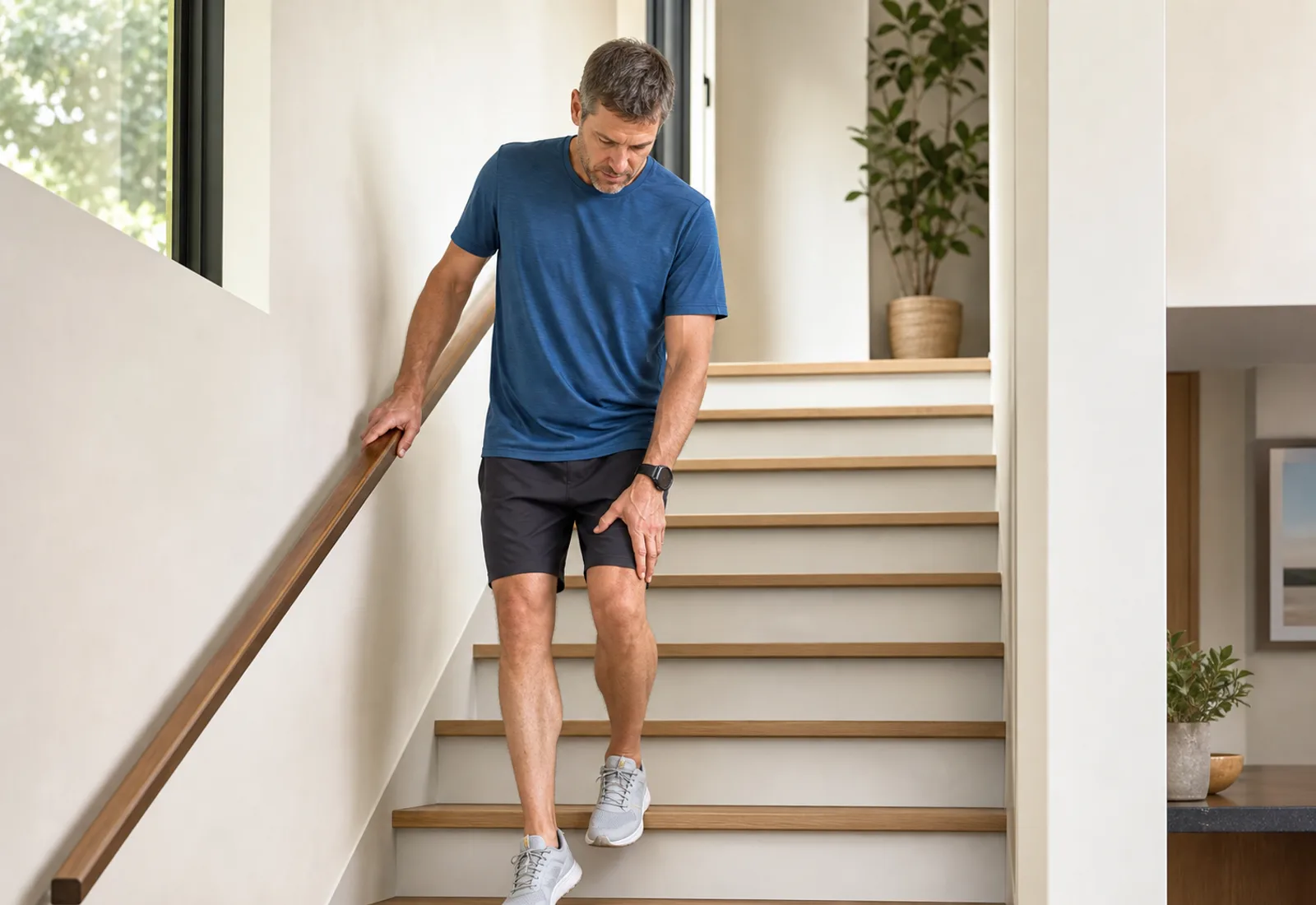
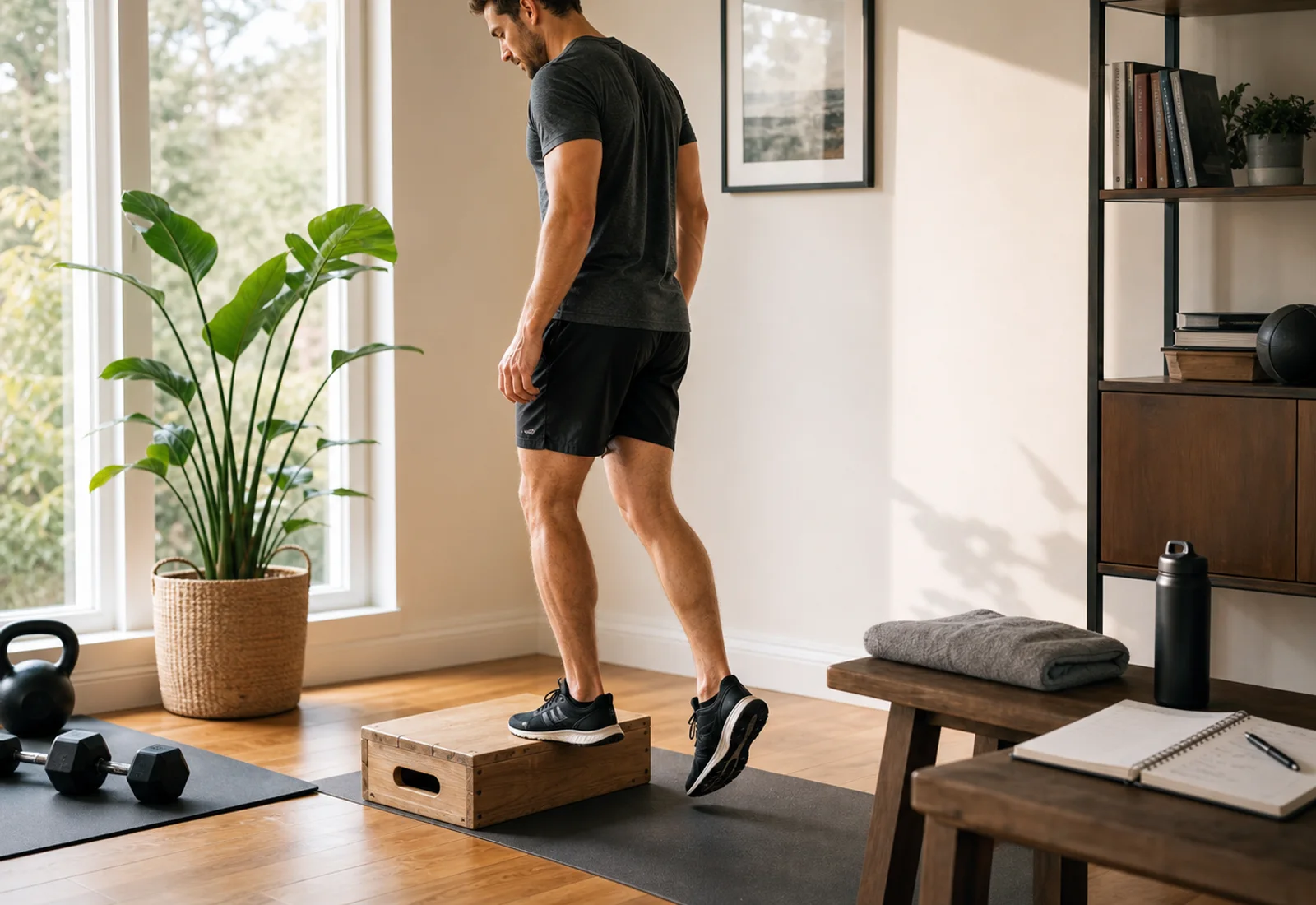
- stairs feel sharper than flat walking
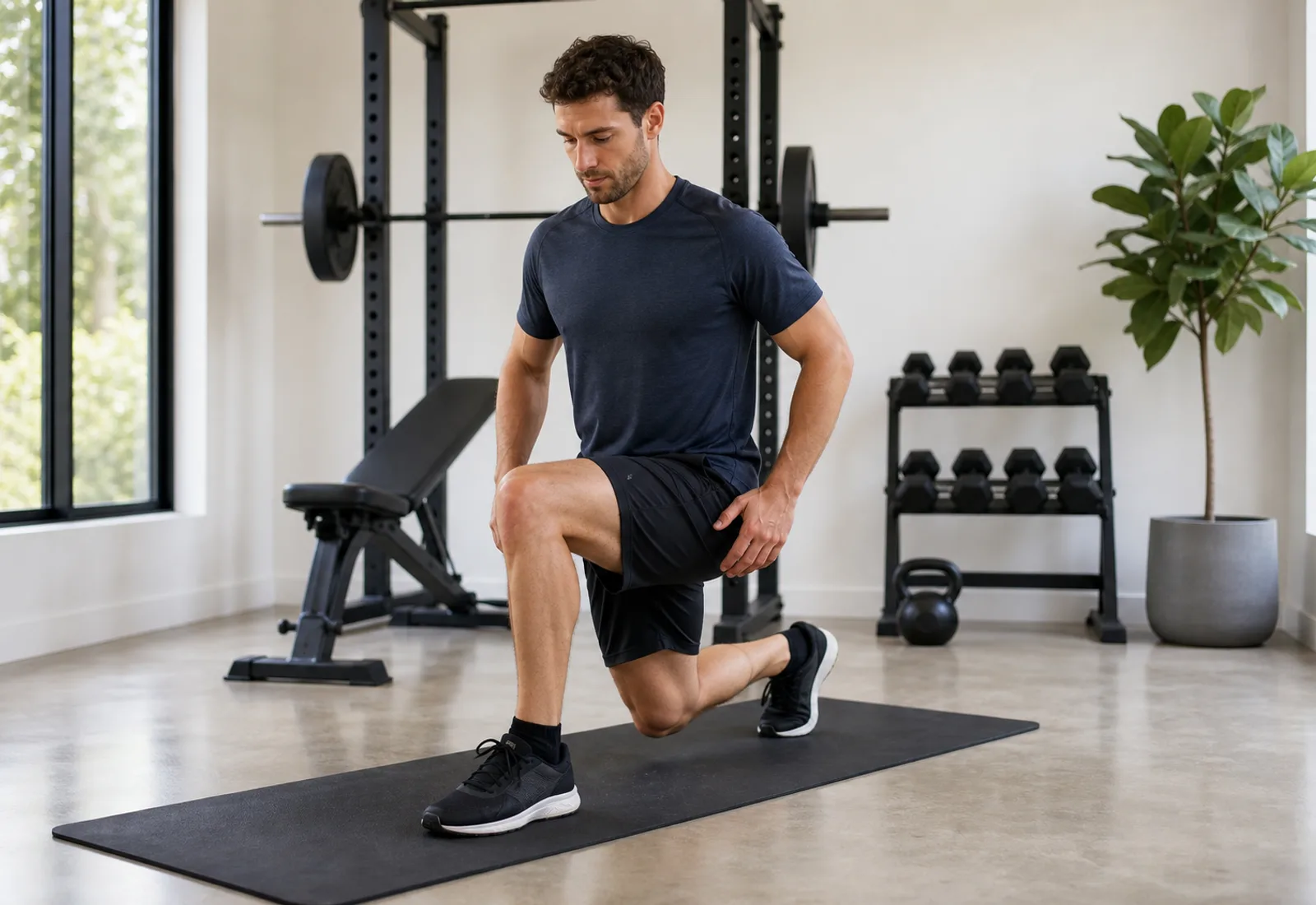
- lunges or split squats expose the pain more than regular squats
- running is fine during the session but bending hurts later
- pain settles with rest, then returns when normal activity resumes
Quick answer for front knee pain bending
Front-of-knee pain when bending often means the current bending demand is ahead of what the knee can tolerate comfortably and repeatedly. The problem may involve the area around the kneecap, the tendon below it, the way load is shared through the leg, or the total weekly demand.
The key is not to guess one cause from the location alone. The key is to map the pattern.
Compare bending tasks
The same knee angle can feel different depending on the task. A squat, lunge, stair descent, kneel, and sit-to-stand all bend the knee, but they load the body differently.
Useful questions:
- Does pain appear only with deep bending?
- Is stair descent worse than going up?
- Are lunges worse than squats?
- Does running make bending worse later?
- Does pain change the next morning?
- Did workload change in the last one to two weeks?
Those answers are more useful than treating every front-of-knee pain pattern as the same problem.
How this connects to patellofemoral and tendon labels
Front-of-knee pain can overlap with patellofemoral pain patterns, especially when stairs, squats, and bent-knee tasks are involved. It can also overlap with tendon-related patterns, especially when pain is more specific below the kneecap and tied to jumping, sprinting, or heavy loading.
The label matters less at the start than the behavior. What makes it worse? What makes it manageable? What changed recently? What can you repeat without a worse response?
A better first experiment
Instead of testing the deepest bend every day, start by finding a tolerable range.
For example, that might mean:
- partial squats before deep squats
- supported split squats before full lunges
- slower stairs with a rail for a short period
- flatter running routes before hills
- fewer high-bend tasks in the same day
The goal is not permanent avoidance. The goal is a clearer baseline.
When to stop self-testing
Self-guided adjustment is not appropriate when the knee is rapidly swelling, unstable, locking, unable to bear weight, or painful after trauma. Fever, numbness, severe night pain, unexplained weight loss, and rapidly worsening symptoms also change the next step.
If those are not present and the pattern is familiar, mild, and load-related, a structured assessment can help you connect the front-knee signal with the wider movement and workload pattern.