
Educational recovery guidance can be useful for recurring pain patterns, but it has limits. Some situations need professional evaluation before any self-guided plan is appropriate.
Who this page is for
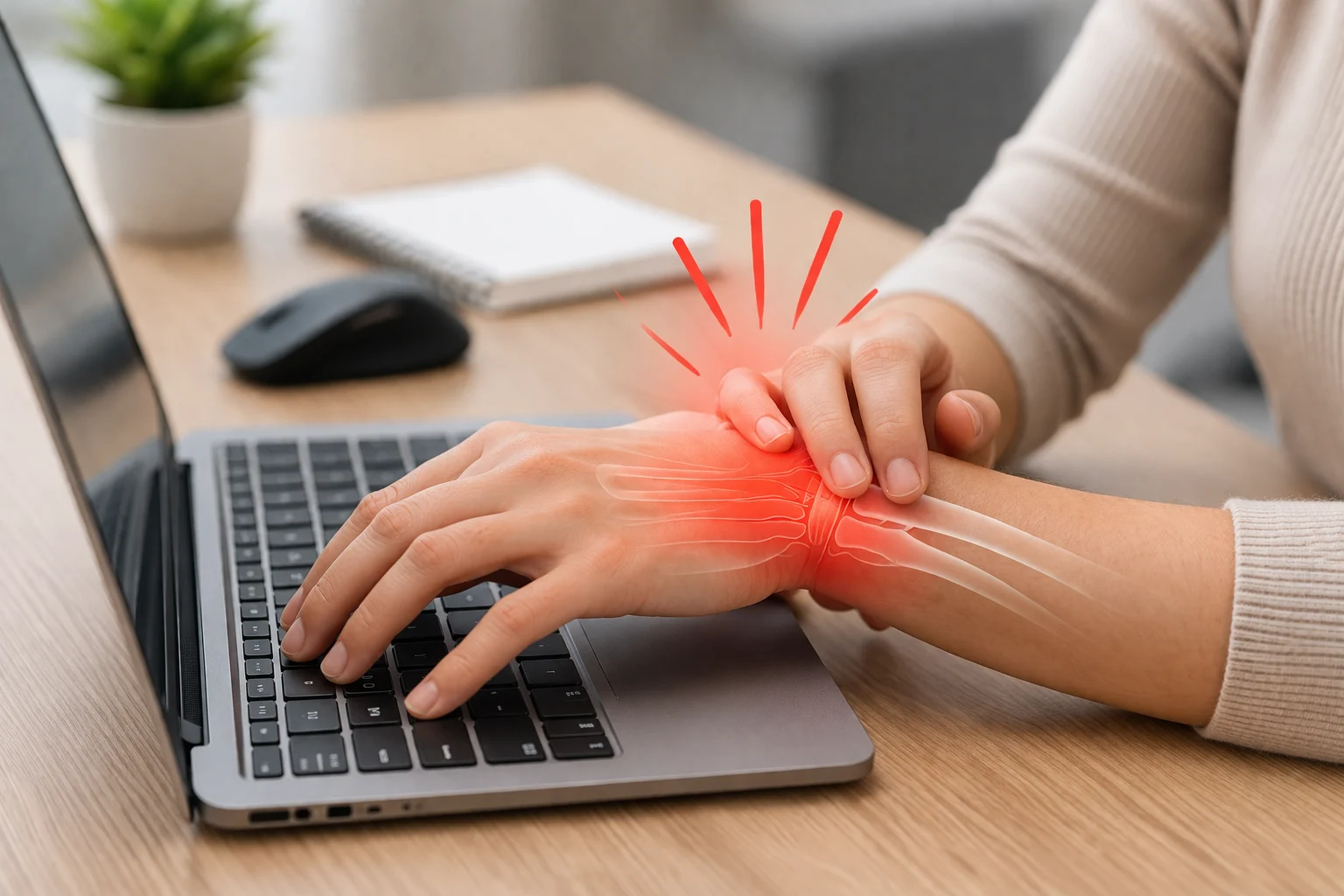
This page is for people who are trying to decide whether their current pain pattern still belongs in the “watch it, adjust it, and reassess” category. It is especially relevant if you landed here from knee pain when squatting, shoulder pain reaching overhead, or wrist pain from typing and now the pattern feels more severe or unusual than expected.
Common scenarios behind the search
Common versions include:
- a familiar pain pattern that suddenly feels bigger, sharper, or stranger than usual
- swelling, weakness, or function loss after a specific incident
- symptoms that are now spreading, happening at night, or affecting normal walking or lifting
- someone unsure whether to continue a self-guided plan after a major change in the picture
Red flags are there to change the next step
Warning signs matter because they change the risk profile. If the pattern includes recent trauma, severe swelling, inability to bear weight, major weakness, numbness, unexplained weight loss, night pain, or symptoms that are rapidly worsening, the right next move is not to keep experimenting on your own.
That does not mean something serious is always happening. It means the situation deserves clinical judgment first.
What changed recently
The word “recently” matters. A familiar tendon flare and a new post-trauma loss of function are not the same story. A mild recurring ache and sudden night pain are not the same story. The safest question is often: what changed, how quickly did it change, and does that change move this outside the normal pattern?
Why people sometimes ignore them
People often talk themselves out of caution for understandable reasons:
- they do not want to lose progress
- they assume it is "just another flare"
- they have dealt with pain before and hope it will settle again
But red flags are exactly the moments when previous patterns are less useful. The context has changed.
If that sounds like your situation, stop using the JointReset assessment as a way to reassure yourself and use it instead as a reminder that the next step is professional evaluation.
Professional evaluation is not a failure of self-management
This is an important mindset point. Seeking evaluation does not mean you have done anything wrong. It means you are using the right tool for the right situation. Good self-management includes knowing when not to self-manage.
A simple rule of thumb
If the area feels different in a way that is bigger, faster, stranger, or more system-wide than the normal pattern, pause the self-guided plan and get evaluated. It is better to be cautious early than to explain away a warning sign that needed attention.
What to modify first
The first change is simple: stop trying to load-test the issue on your own. Pause the experimental plan, note the relevant symptoms and timeline, and get the right clinical input.
What not to do this week
Do not keep forcing through sessions to see whether it “warms up.” Do not build a new home plan around a symptom pattern that now includes clear warning signs. And do not treat internet reassurance as a substitute for evaluation when the picture has clearly changed.
Practical takeaway
Self-guided recovery belongs inside clear safety boundaries. When those boundaries are crossed, the next best step is professional evaluation first, not more guesswork.